Trust or Bust: Winning Over Users and Bots in SEO

Someone read your best page this week and decided not to believe it.
I gave a talk on that idea, Trust or Bust: Winning Over Users and Bots in SEO, at the Sydney SEO Conference, hosted by Prosperity Media. It’s the framework I keep coming back to with clients: there are two audiences you need to win over, users and the systems Google uses to assess content, and most people only ever optimise for one.
This is the full playbook version, with the checklists, case studies and examples that didn’t fit on the slides.
Here’s the problem, as I see it in 2024. Users are hungry, hungry for great content, but misinformation and spammy AI content have left a bad taste in users’ mouths. Most people now search Google expecting to wade through junk before finding something they can trust.
Google has the opposite problem. Googlebot crawls trillions of pages but only indexes about 400 billion of them, and even worse, less than 10% of people visit page two of the results (Search Engine Land; Protofuse). So Google needs to serve up the best, like a great restaurant with a small menu.
So let’s eat.
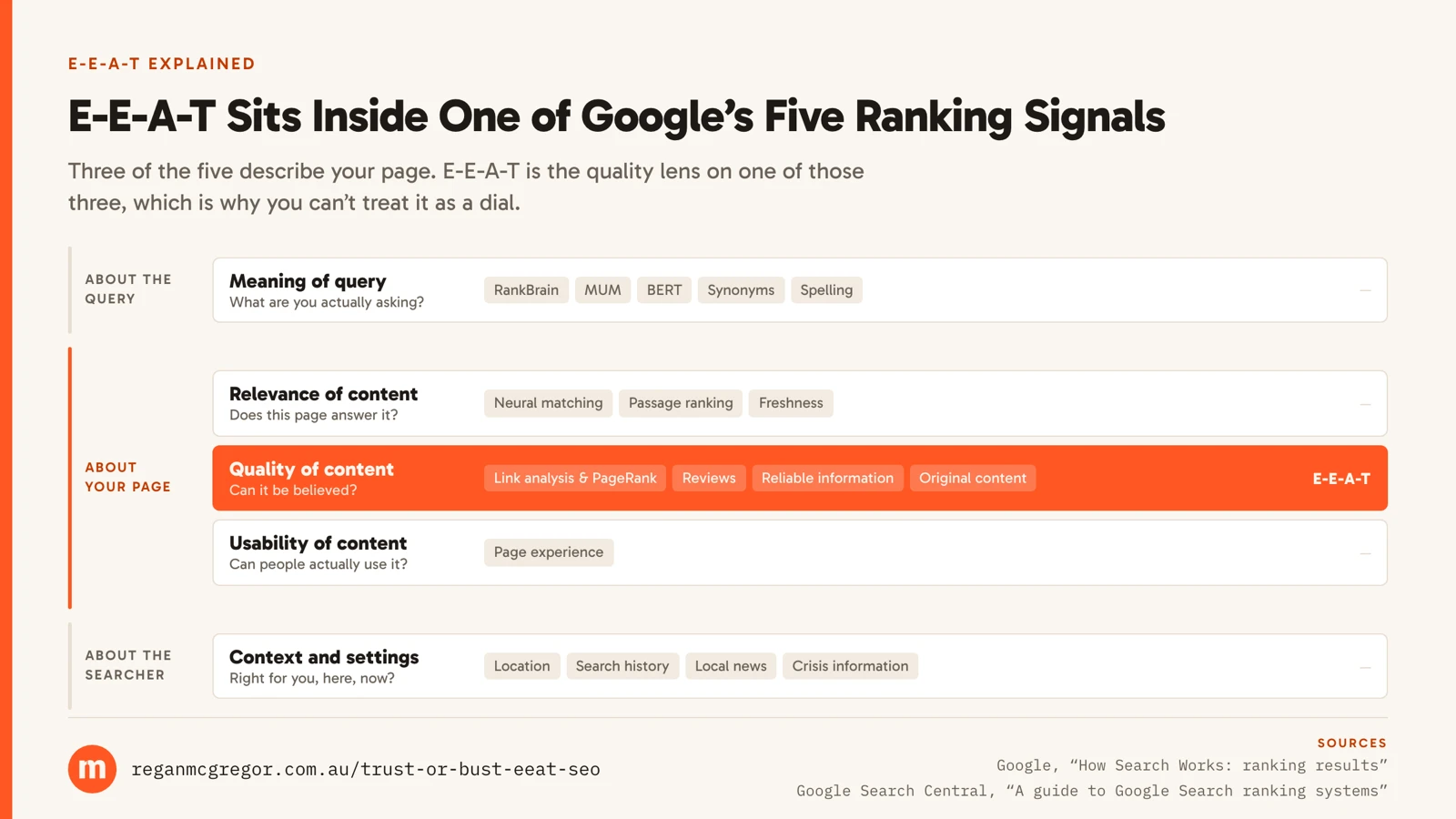
Three of the five signals describe your page. E-E-A-T is the lens on one of them
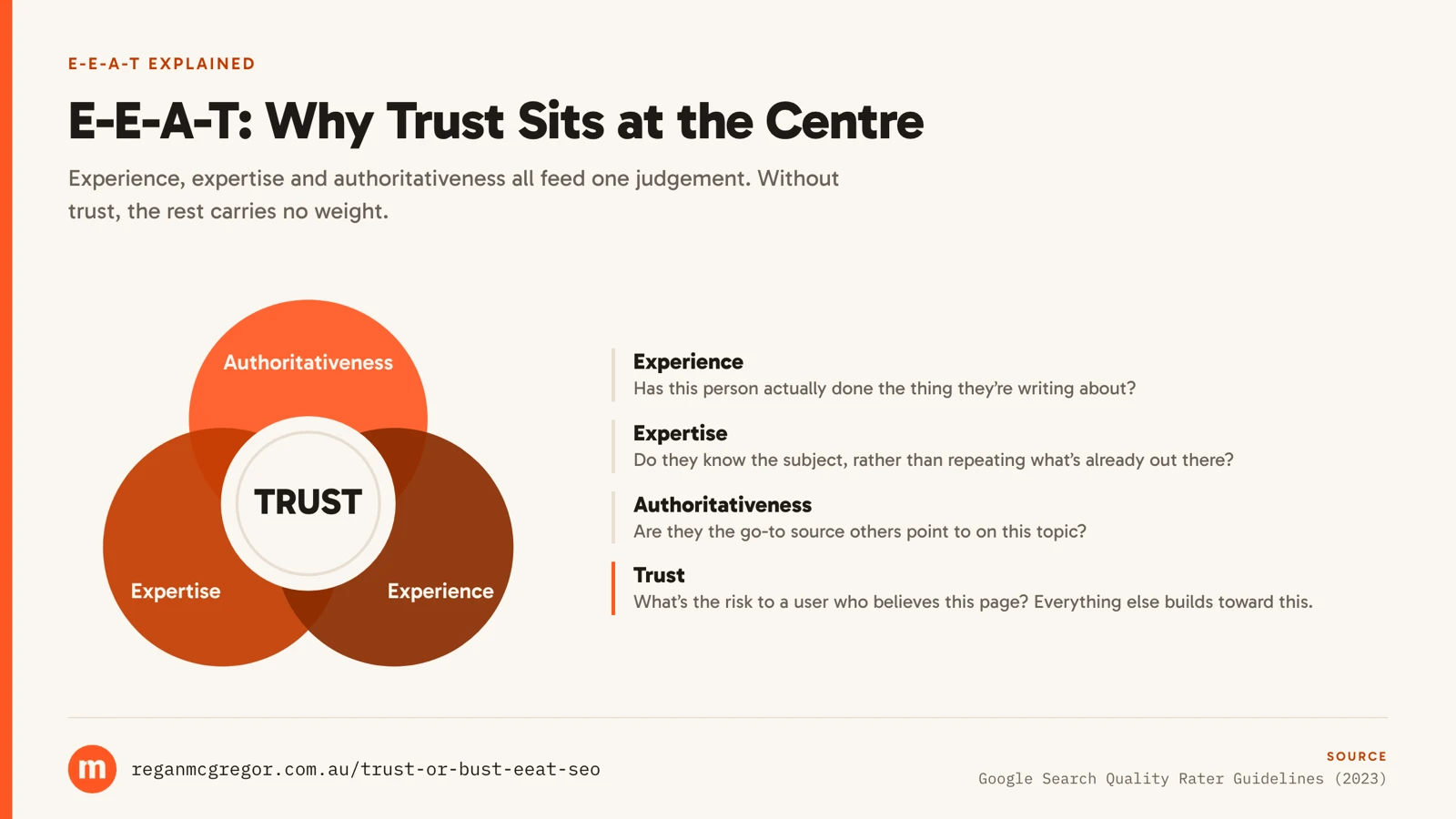
Trust is in the middle for a reason. The other three only matter because they build it
What E-E-A-T Actually Is (And Isn’t)
Let’s talk about what E-E-A-T isn’t, first, because most of the confusion in our industry starts here.
It’s Not a Ranking Factor
E-E-A-T isn’t a ranking factor. Google has said so directly, despite a lot of debate and social chat over whether it secretly is one anyway.
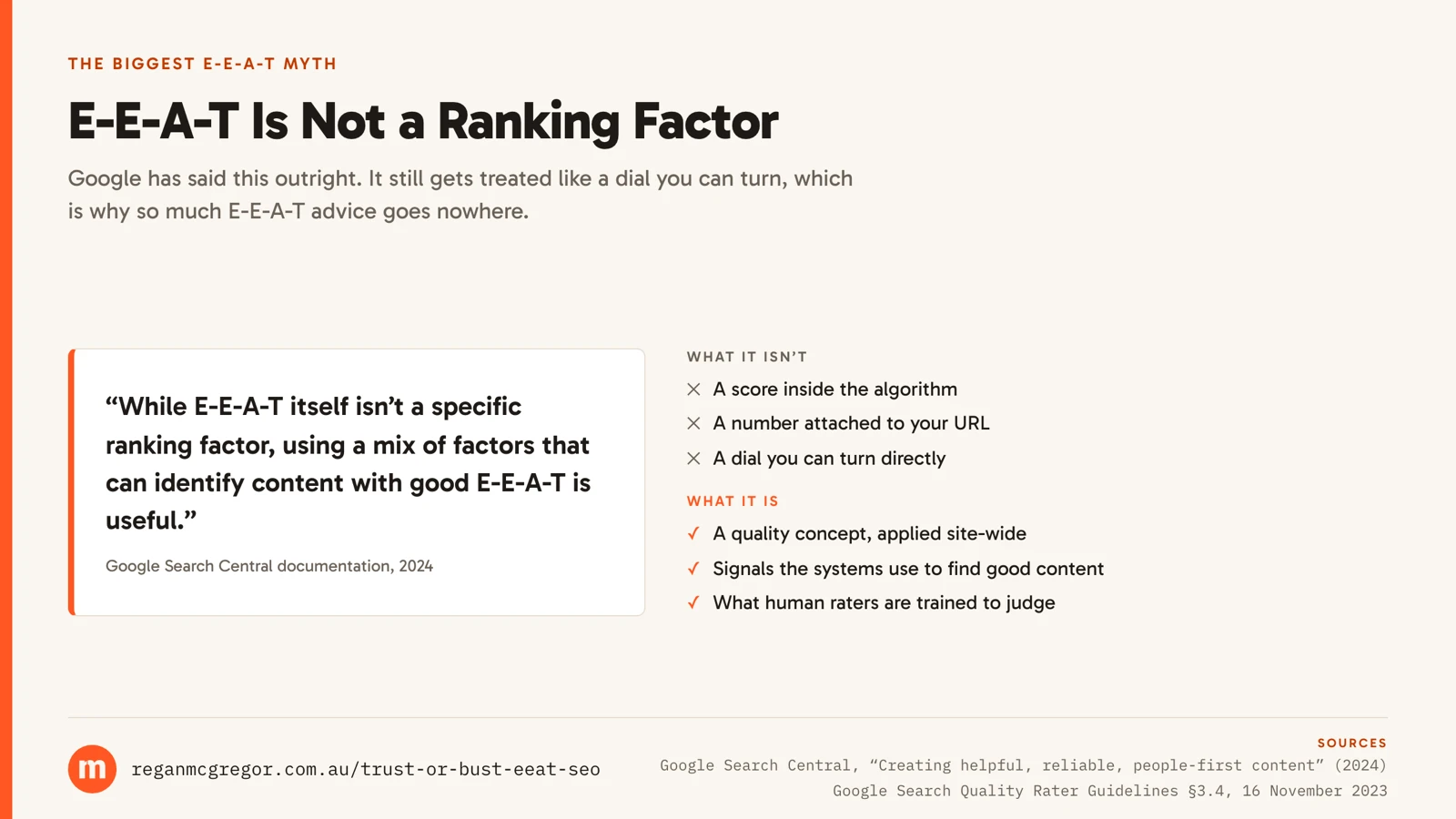
Google’s own wording, from their documentation as it stood in 2024
What Google actually says is that automated systems (Google Discover, Google News, the Search Generative Experience it was trialling at the time) use signals related to E-E-A-T to surface genuinely helpful content. It’s also baked into the Search Quality Rater Guidelines, the manual human raters use, which in turn trains the algorithms Google ships next.
So it’s not one score sitting inside the algorithm. It’s a lens Google uses across several systems, and one you can use too, both to guess how Google sees your site and to check how a sceptical human would.
It’s a Quality Classifier, Not a Score
Instead, think of it as an umbrella term. I like to look at it as a quality classifier.
Systems like helpful content, the review system, reliable information systems, and original content systems all sit under that umbrella. Treat E-E-A-T as a quality concept applying to a whole website, not a number bolted onto one URL, and it gets much easier to reason about how it affects your rankings.
The Quality Rater Guidelines score pages on a four-level scale (Lowest, Lacking, High, and Very High E-E-A-T), which is what feeds the quality signal above. Raters aren’t ranking your page directly. They’re producing the training data that teaches Google’s systems what “trustworthy” looks like at scale.
The Four Letters, and Why Trust Sits at the Centre
E stands for Experience, E for Expertise, A for Authoritativeness, and T for Trust. In the diagram from the Search Quality Rater Guidelines, trust sits at the centre of E-E-A-T, and everything else builds toward it.
Trust is Google’s way of asking: what’s the risk if a user trusts this website? Who’s behind it, are they reliable, and what can a user do if something goes wrong? I start with trust because Google’s Search Quality Rater Guidelines (§3.4, 16 November 2023) say it outright: “Trust is the most important member of the E-E-A-T family because untrustworthy pages have low E-E-A-T no matter how Experienced, Expert, or Authoritative they may seem. For example, a financial scam is untrustworthy, even if the content creator is a highly experienced and expert scammer who is considered the go-to on running scams!”
Authoritativeness asks whether a website or a content creator is the go-to resource for a topic.
Expertise asks whether somebody knows what they’re talking about: whether, when they source information, they’re not just regurgitating what’s already out there. Would you trust electrical advice from an electrician, or from somebody who’s a bit of a DIY enthusiast? Would you take SEO advice from an experienced practitioner, or from a random forum post insisting meta keywords are still the secret to ranking in 2024?
Experience, the newest addition to the acronym, asks about the genuineness of the content. Does this person have real, first-hand experience of the thing they’re writing about?
Experience, Expertise and Authoritativeness all layer up into that one assessment: Trust.
Building Trust With Users
You might be wondering why I’m starting with users, instead of jumping straight to how bots crawl and rank pages. To answer that, we need to go from trust to antitrust.
If you’ve followed the recent Google antitrust proceedings, you’ve probably seen the exhibit confirming what a lot of us already suspected: that Google has, at some point, used user signals to influence rankings. Maybe it still does, maybe it doesn’t. Either way, isn’t that exactly what the Search Quality Raters programme has always been about?
Users and bots aren’t two separate strategies. They’re assessing the same thing with different tools. Start with the humans.
Trust: What Do You Say About Your Site?
One of the first questions users are trying to answer, often without realising it, is: what do you say about your site?
The first place most people land is your About page. Wirecutter’s is a great example: upfront about earning affiliate commissions, and just as upfront that they don’t get paid that commission if you return the product. That single disclosure tells the reader the recommendation is in their interest, not just Wirecutter’s.
Your team page matters too. Yoast’s is full of real, identifiable people who’ve clearly contributed to the industry: it reads nothing like a faceless affiliate site.
Then there’s the question users ask without ever putting it into words: what can I do if something goes wrong? That’s what contact pages answer. The Quality Rater Guidelines expect most legitimate businesses to have a real email address, a physical address, and a clear way to get in touch.
Last on the list is policies. I know it sounds boring and legal, but a visible returns policy tells users what happens if something goes wrong: people have been trained to scroll to the bottom of a page looking for exactly this.
Checklist: What You Say About Your Site
- A genuine About Us page, including how you make money if that’s relevant
- A team page with real, named, verifiable people
- Clear contact information: email, address, a real way to reach you
- Visible site policies, including returns and refunds
Trust: What Do Others Say About You?
You can talk about your own site however flatteringly you like. Most users are sceptical of that, which is why the next question they ask is what others say about you.
This is reiterated directly in the Search Quality Rater Guidelines, which give raters a whole set of methods for researching a site’s online reputation. One trick you can run right now: search yoursite.com -site:yoursite.com. This shows you everything Google understands about your website without your website in the results: a genuinely useful way to audit your brand presence before you try to optimise it.
Brand references are the obvious next step. If you’re a big enough business, Wikipedia is the target. Smaller sites can look at Crunchbase or CB Insights, which don’t have the same notability bar. Claiming your social profiles and filling out your business description properly is a simple way to own that first page of results for your own brand name.
Love them or hate them, independent review sites are here to stay. Trustpilot and ProductReview.com.au rank for most brands, alongside directories like Yelp, Yellow Pages and Facebook, and if you have an app, the app stores usually take the number two spot in a branded search. Claim these, respond to the negative reviews, and actively work on earning the positive ones.
News coverage carries more weight than anything you say about yourself, because it’s a channel you don’t control: search “OpenAI” and you’ll see how much news coverage shapes what shows up first for a brand. Building press isn’t easy; it usually means digital PR and outreach, but it’s one of the few ways to counterbalance negative coverage you can’t remove.
Specific niches often have their own credibility sources: Clutch for agencies, Fresha for beauty businesses, Rate My Agent for real estate, G2 for software. These carry weight with users who already know to look there.
Checklist: What Others Say About You
- Brand references on Wikipedia, Crunchbase, or CB Insights
- Claimed and actively managed independent review profiles
- A genuine effort toward earning press and digital PR coverage
- Presence on niche-specific credibility platforms for your industry
Trust: What’s Visible on the Page?
The last trust question is the simplest: what’s visible on the page right now?
Recency bias is a huge cognitive factor in trust. A clear, current date tells a reader the information is up to date, and it’s one of the easiest ways to stop someone pogo-sticking back to the results. NerdWallet leans into this well.
There’s also a first-impression effect before a reader reads a word: research out of Carleton University found people form a judgement about a web page’s visual appeal in around 50 milliseconds (Lindgaard et al., Behaviour & Information Technology, 2006). That’s not enough time to read anything: it’s layout, whitespace, and whether the page looks cared for.
Disclosures matter too, especially around how a site makes money. Bankrate does this well: their disclosure pops up inline, without sending the reader off the page, so they get the transparency without losing the reader’s attention.
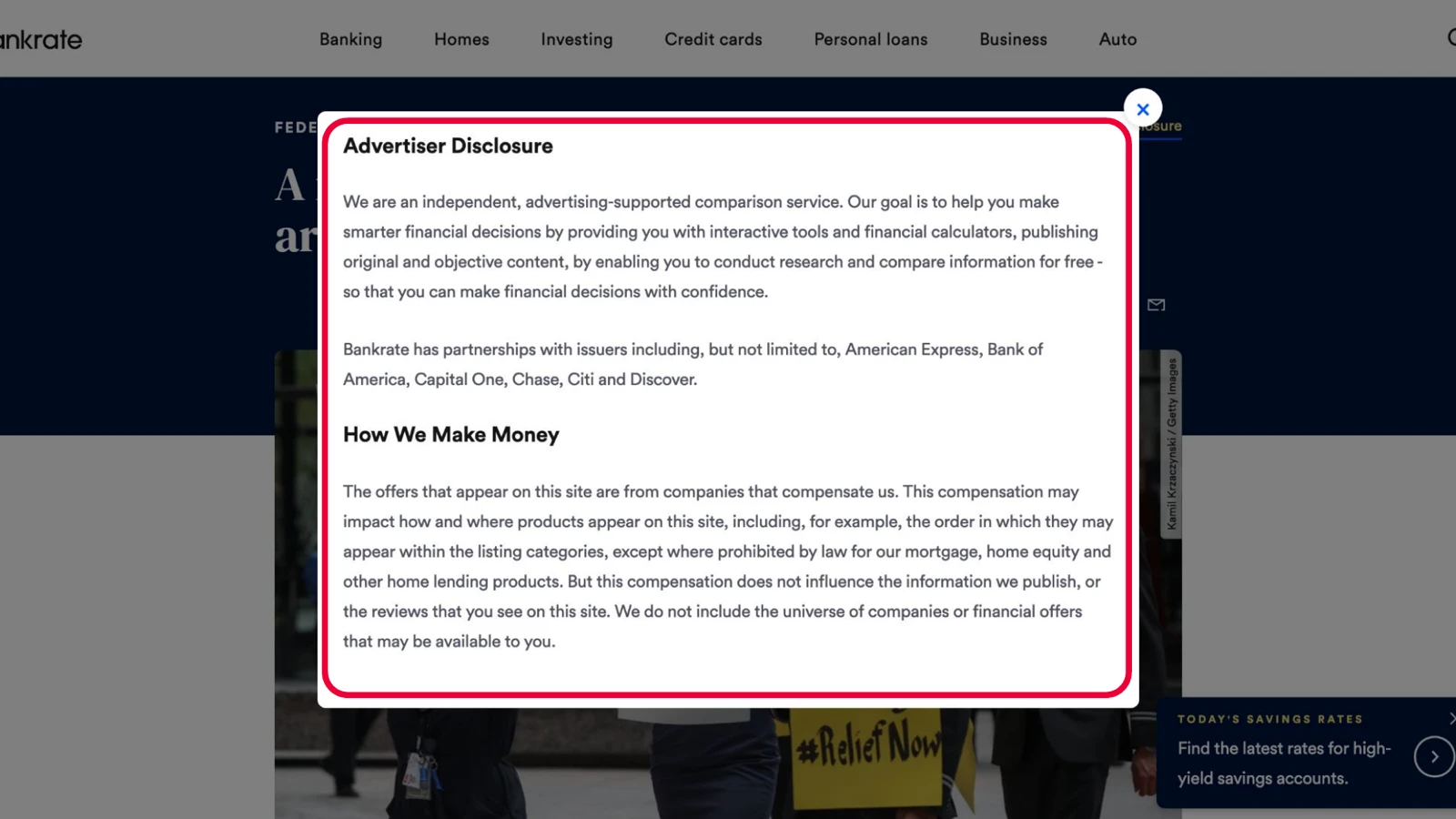
Full transparency without ever sending the reader off the page
Checklist: What’s Visible on the Page
- Clear, current publish and update dates
- A page that looks and feels cared for, not abandoned
- Transparent, inline disclosures about monetisation or editorial policy
- Visible publishing principles or editorial standards
Authoritativeness: Are You the Go-To Resource?
For users, forget the technical definition of topical authority. What it actually means to a reader is simpler: do you show up, consistently, whenever they search around your topic?
Take Ahrefs as an example. Whenever I’m researching something SEO-related, they turn up, maybe not in position one, but they turn up. By the time I reach a transactional search, they’ve already built brand love with me, even if a competitor technically ranks above them.
As much as I love keyword tools, if you’re a small player trying to build authority, competition is the killer: keyword tools can’t compete with Google for speed and depth of topic understanding. So go beyond them. Use Google Trends, News, People Also Ask, related searches, and Suggest to get on top of what’s trending in your space. About 15% of the searches Google sees every day are ones it hasn’t seen before, so a keyword database alone will always be playing catch-up.
Go beyond keywords in format too. Maybe video isn’t your jam, and that’s fine: YouTube, forums, and industry newsletters all build the kind of insight a written article alone can’t.
Most of us think of domain authority in terms of Domain Rating and backlink counts. Users think in trust by association. When someone sees your brand linked from Wikipedia or a respected niche site, they carry that trust with them when they click through, and it funnels straight into how legitimate your content feels.
Case study: Epic Gardening. Epic Gardening built brand authority well beyond written content: a YouTube channel turning every article into a video, promoted heavily, has earned 2.76 million subscribers over the past decade, plus 2.9 million TikTok followers doing the same thing in short form. The backend numbers back it up: Domain Rating 73, roughly 229,000 backlinks from 10,100 referring domains, around 720,000 monthly organic traffic, and roughly 8,100 monthly branded searches (Ahrefs). Citations from Wikipedia and Tasting Table both work the trust-by-association angle above, and Epic Gardening now has its own Knowledge Panel as a result.
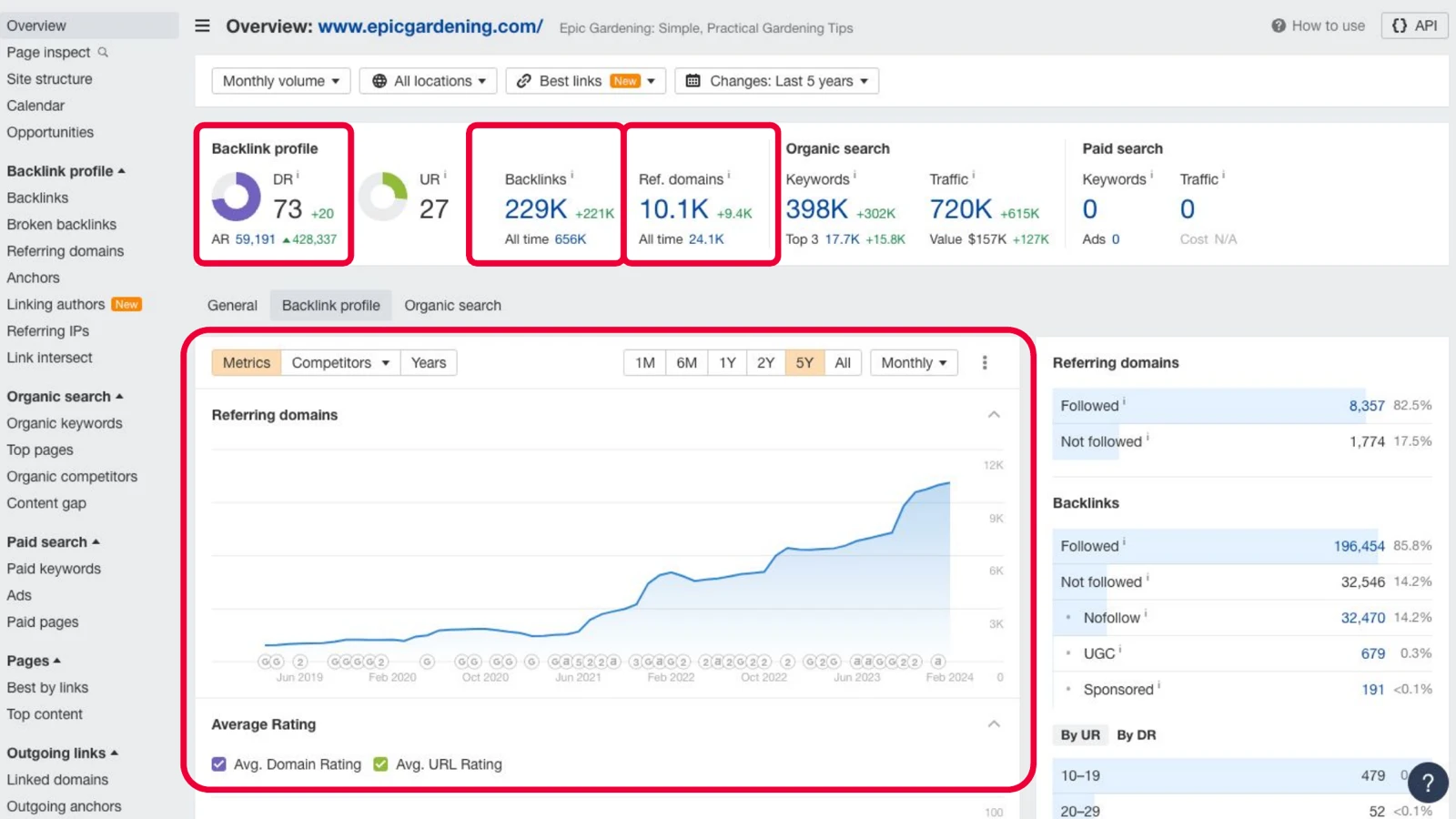
A decade of compounding, in one screen
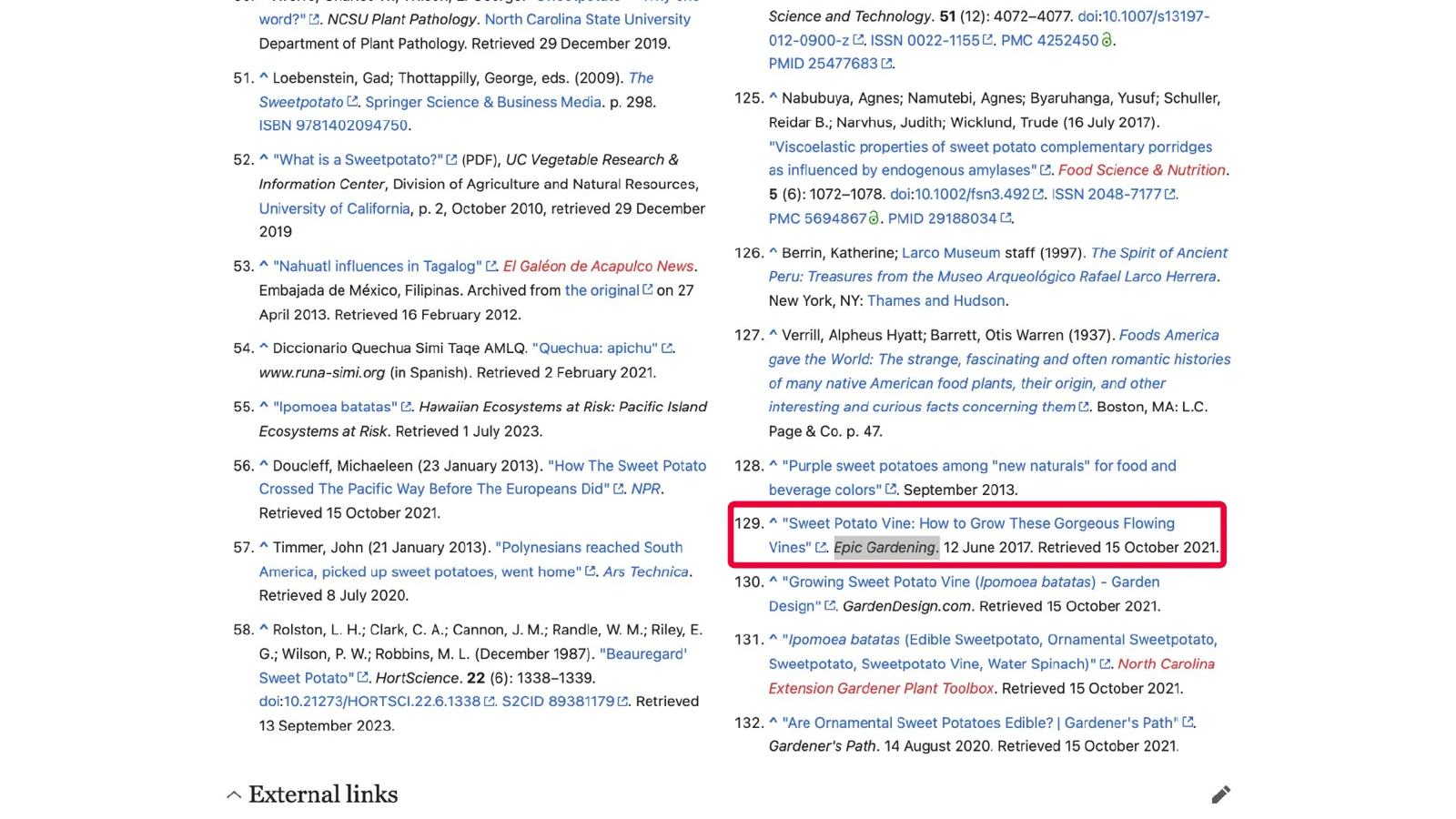
Trust by association. You can’t buy a Wikipedia editor citing you as a source
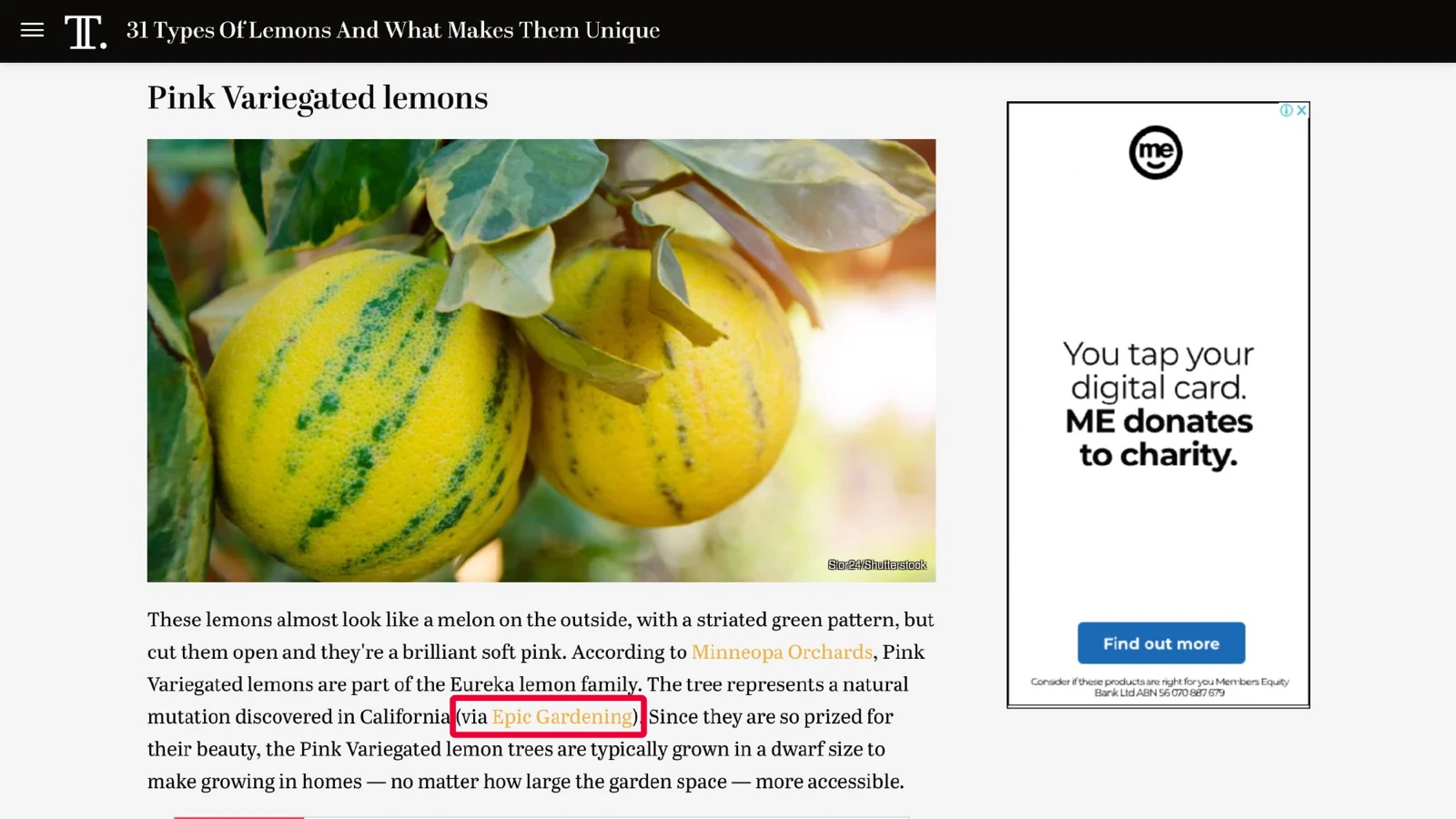
It keeps happening on niche sites too, which is the signal that actually compounds
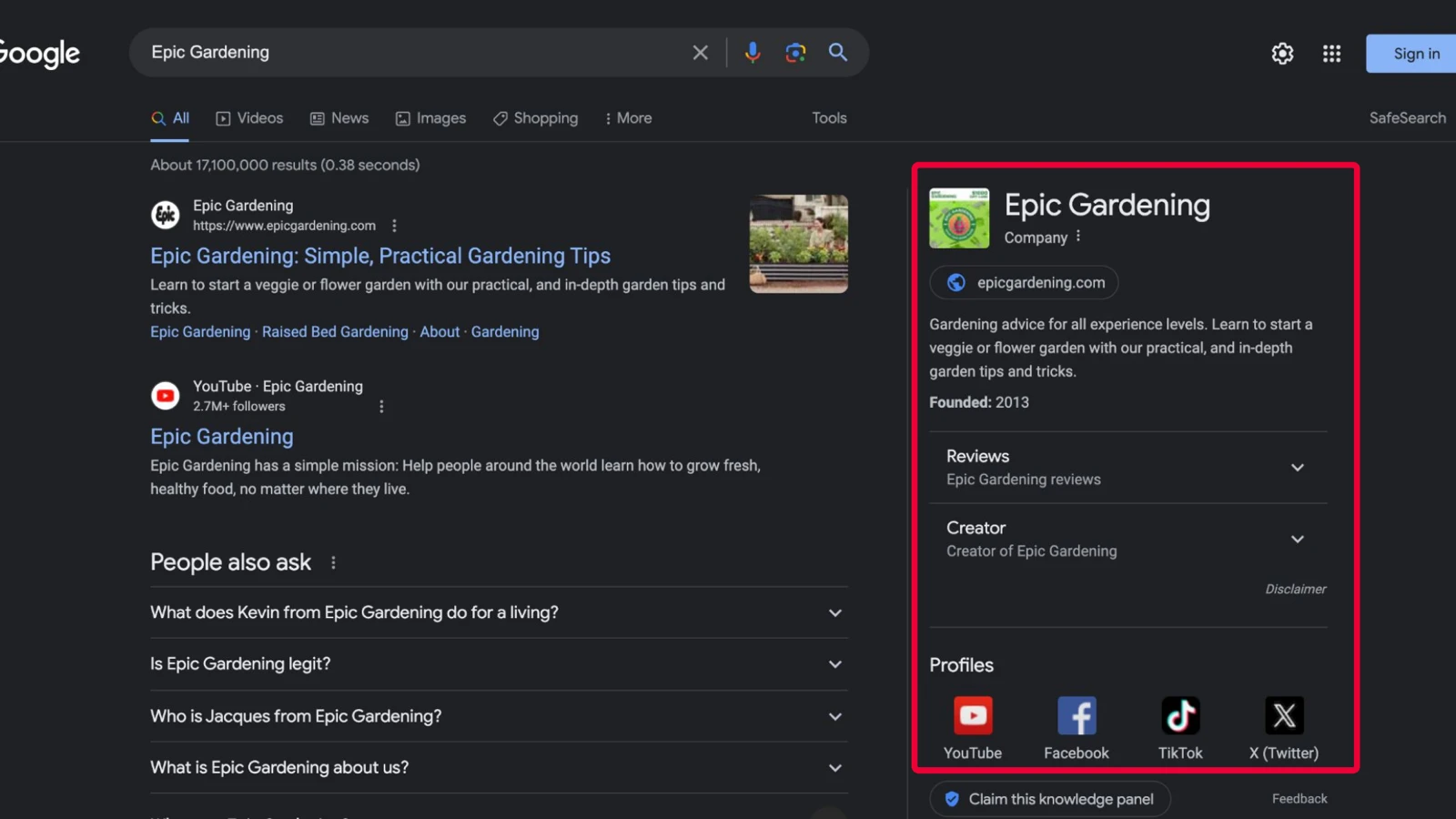
The payoff: Google treats the brand as a real entity
Case study: Kevin Espiritu. Kevin is the founder of Epic Gardening, and a great example of author authority specifically, separate from the brand. Self-taught, he’s built his authority by contributing to gardening news articles, joining podcasts and interviews in his niche, and publishing several books, plus a personal entrepreneurship narrative told across podcasts and video about building the business itself. His branded search volume has grown to around 500 searches a month, alongside 3.6 million social followers, 11 million podcast downloads, and 42 million self-reported blog visits.
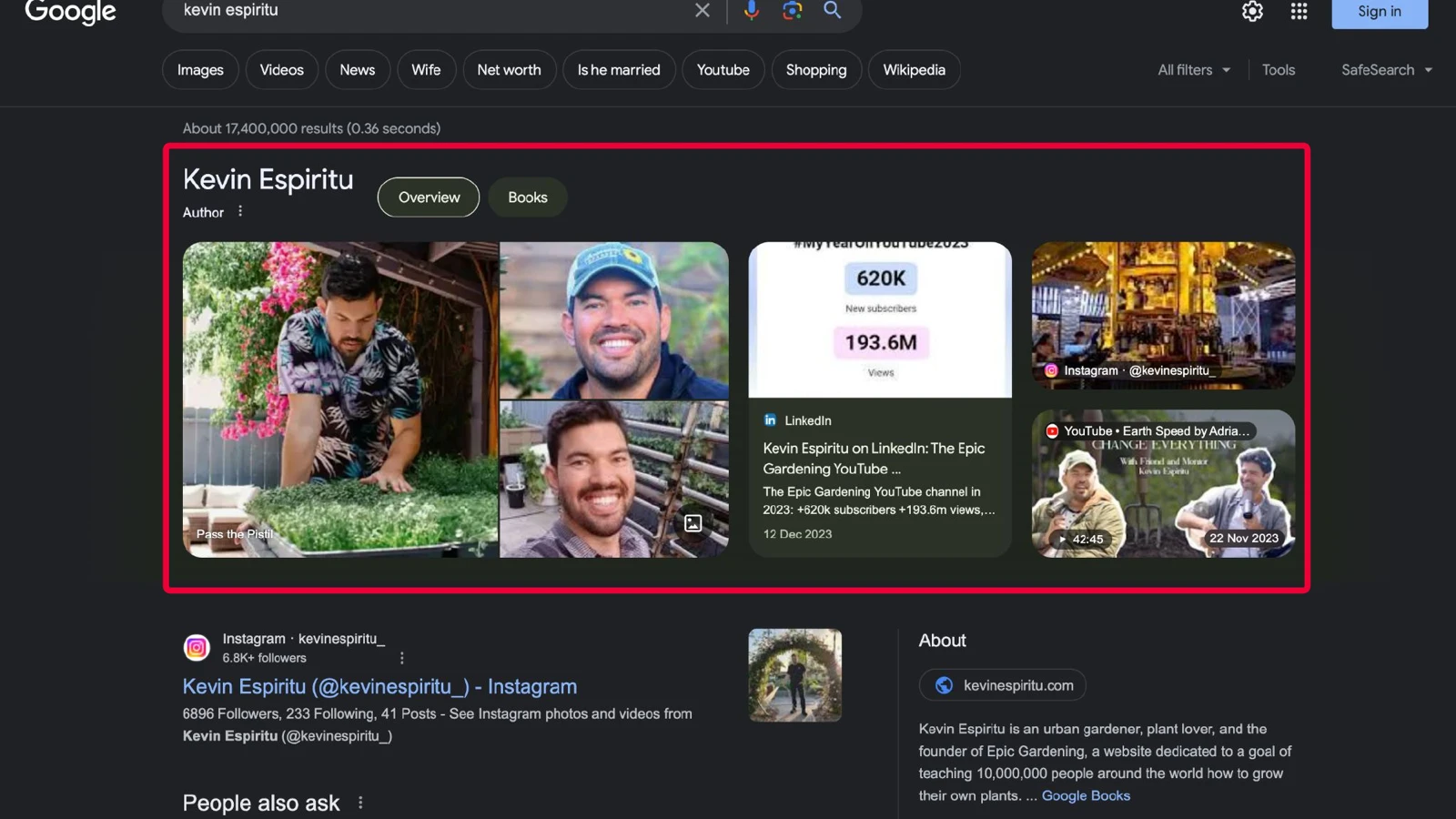
The founder gets his own entity panel, separate from the brand’s
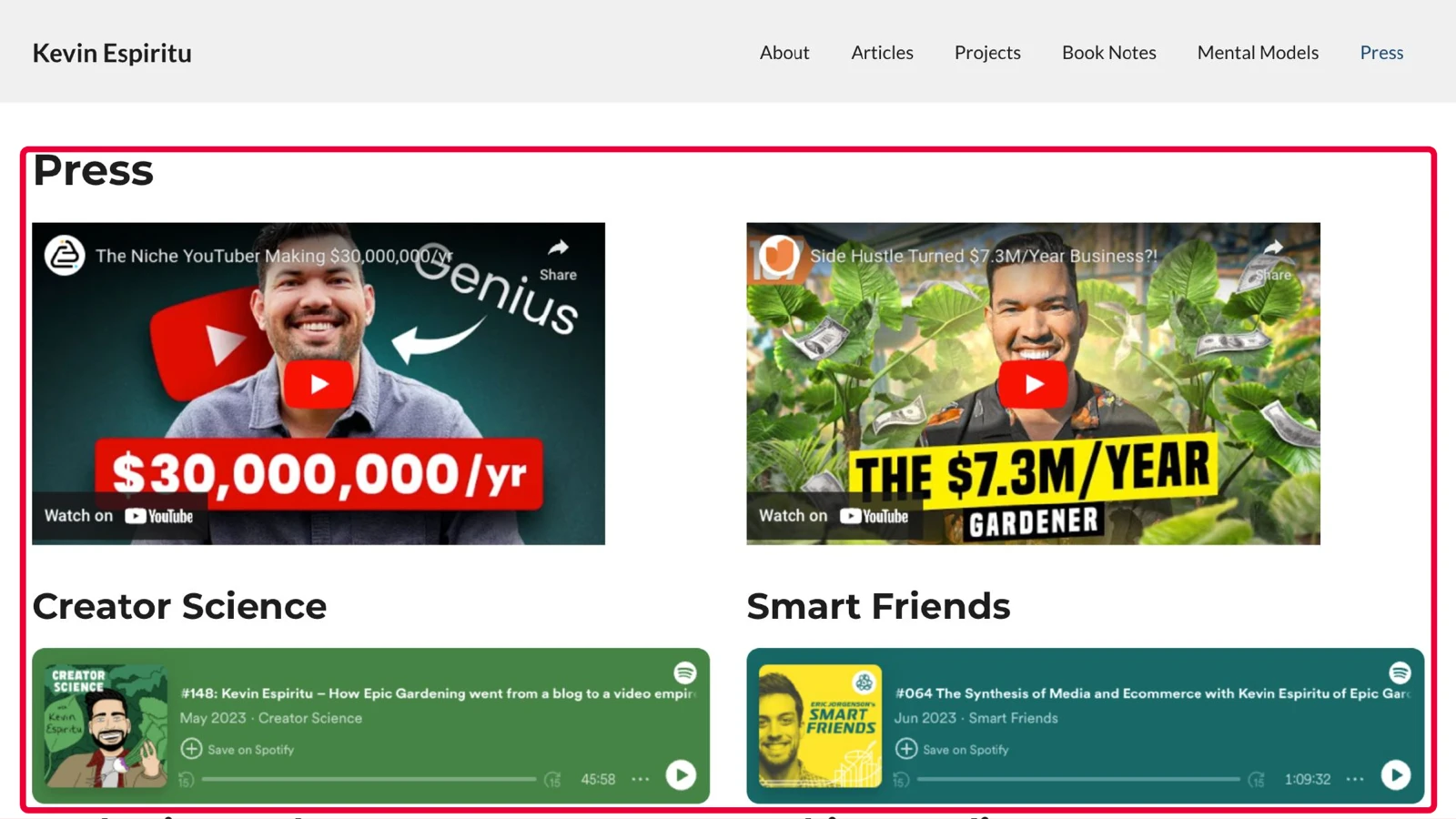
Press and podcasts collected in one place, so people and crawlers can both find them
Checklist: Authoritativeness
- Show up consistently across the topics your business owns, not just your money keywords
- Track trends, News, People Also Ask, and Suggest, not just a keyword database
- Diversify format: video, forums, newsletters, where your audience already spends time
- Earn citations from high-trust sites in your niche, not just link volume
Expertise: Does This Demonstrate Knowledge?
For expertise, the question users are asking is whether this content demonstrates real knowledge or skill.
If you’re going to make a claim, back it up with a source. Citations and external links to reputable sources (a health article linking to the CDC, say) are one of the simplest ways to build expertise into your content.
Author bios matter enormously. A proper bio gives a real sense of who wrote this, their background and education, and lets a reader verify they’re a real person through a linked social profile. Bankrate’s author pages, credited to named writers like Sarah Foster, do this well.
Sometimes the writer isn’t the expert, but an expert reviewer is available, and that’s where you borrow authority. Google’s guidance on creating helpful, reliable, people-first content asks it outright: is this content written or reviewed by an expert who demonstrably knows the topic well? A running coach who’s trained 30,000 runners is a great reviewer for an article on running form. He’s not the right reviewer once the topic shifts to health risk: that’s a YMYL (your money or your life) topic needing someone medically qualified, not just any subject-matter expert. That’s where a reviewer like Dr Vanessa Nzeh comes in, adding legitimacy a running coach’s review can’t.
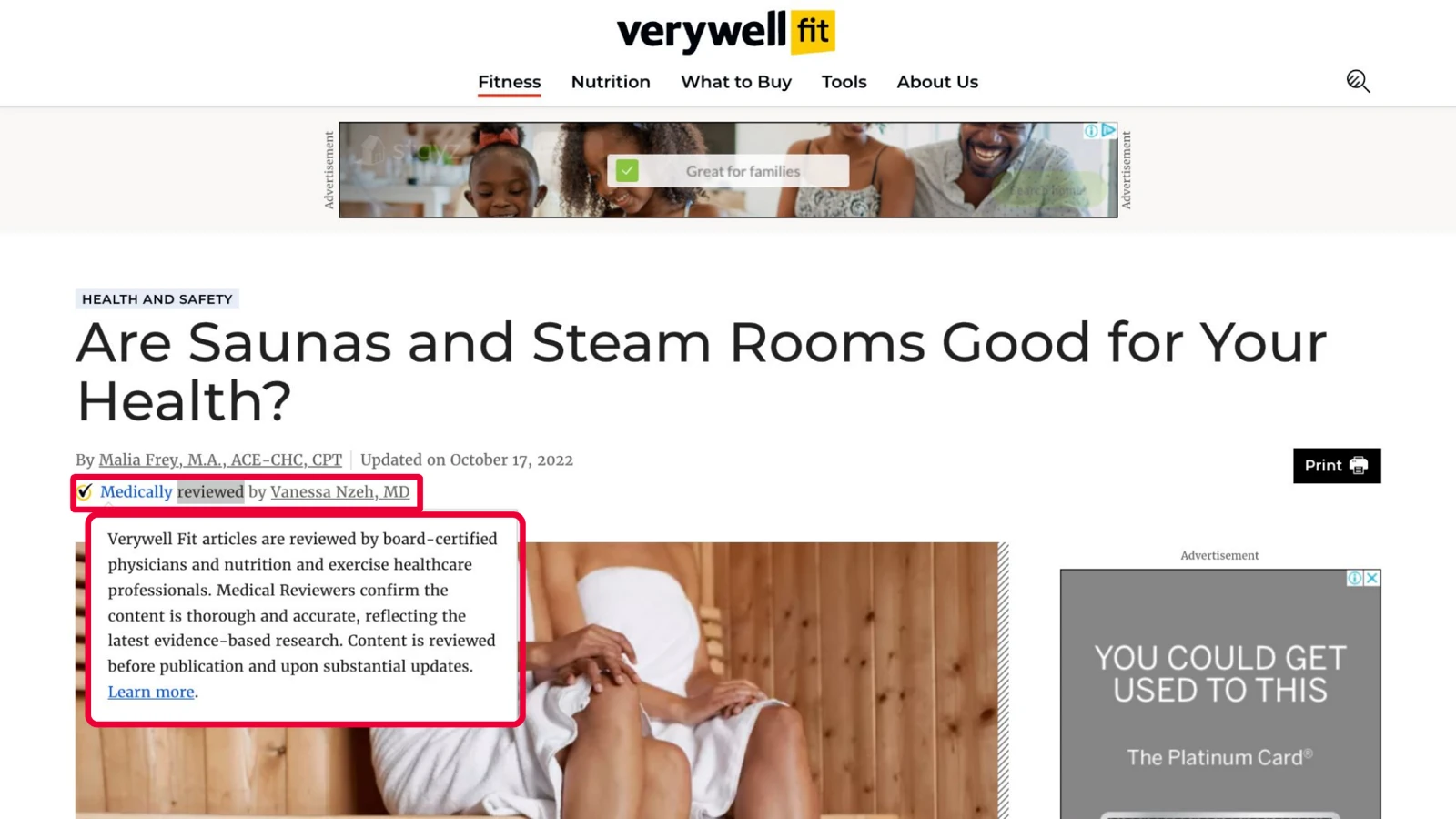
What YMYL is supposed to look like: a named, credentialled reviewer right under the headline
A visible fact-checking process is the last layer. NerdWallet publishes theirs openly, including how readers can flag corrections, adding trust on top of the content itself.
Checklist: Expertise
- Clear sourcing and citations for every claim that needs one
- Real, verifiable author bios with background and credentials
- Expert review for specialist content, escalated to a qualified medical or professional reviewer for YMYL topics specifically
- A visible, transparent fact-checking process
Experience: Is This Genuine?
The last E, and the newest, asks whether the content is genuine: does this person have real first-hand experience of what they’re describing?
Houzz does this well in its contributor articles, where designers write in first person: “I did this,” “we did that,” signalling lived experience, not a rewrite of someone else’s article.
Ask yourself: what is different about your content than the other nine results in the SERP? Naplab answers that with unique insight: its mattress reviews score cooling, motion transfer and response time on proprietary scales you won’t find elsewhere, backed by a first-person verdict about the mattress the reviewer actually sleeps on.
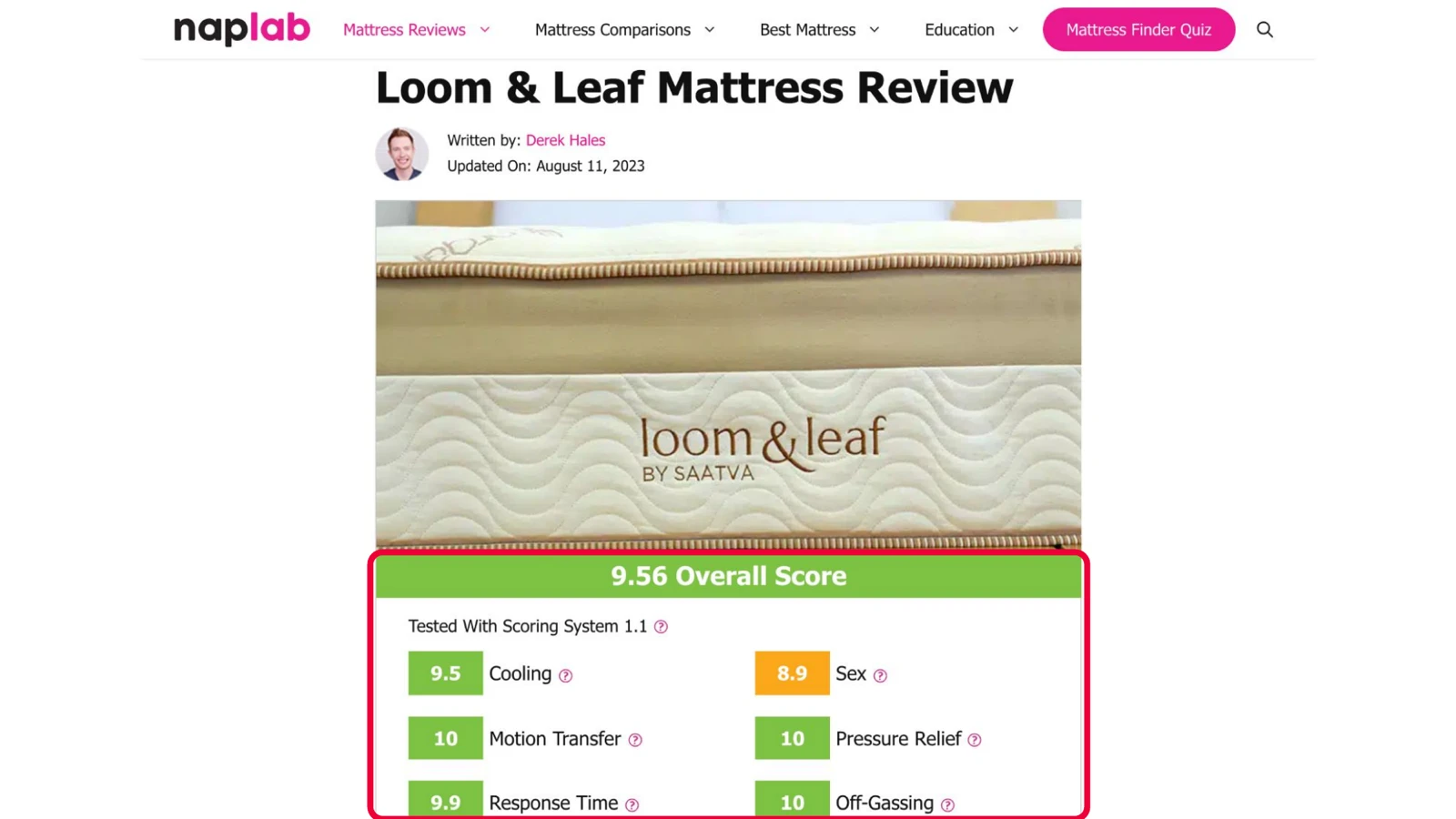
Scoring this specific is hard to fake, which is exactly the point
Demonstrated history matters too. Instructables’ Jay Bates clearly has a long history building things out of timber, and adds extra value with video alongside his written instructions, pulling stills from that video into unique images that make his points easier to follow.
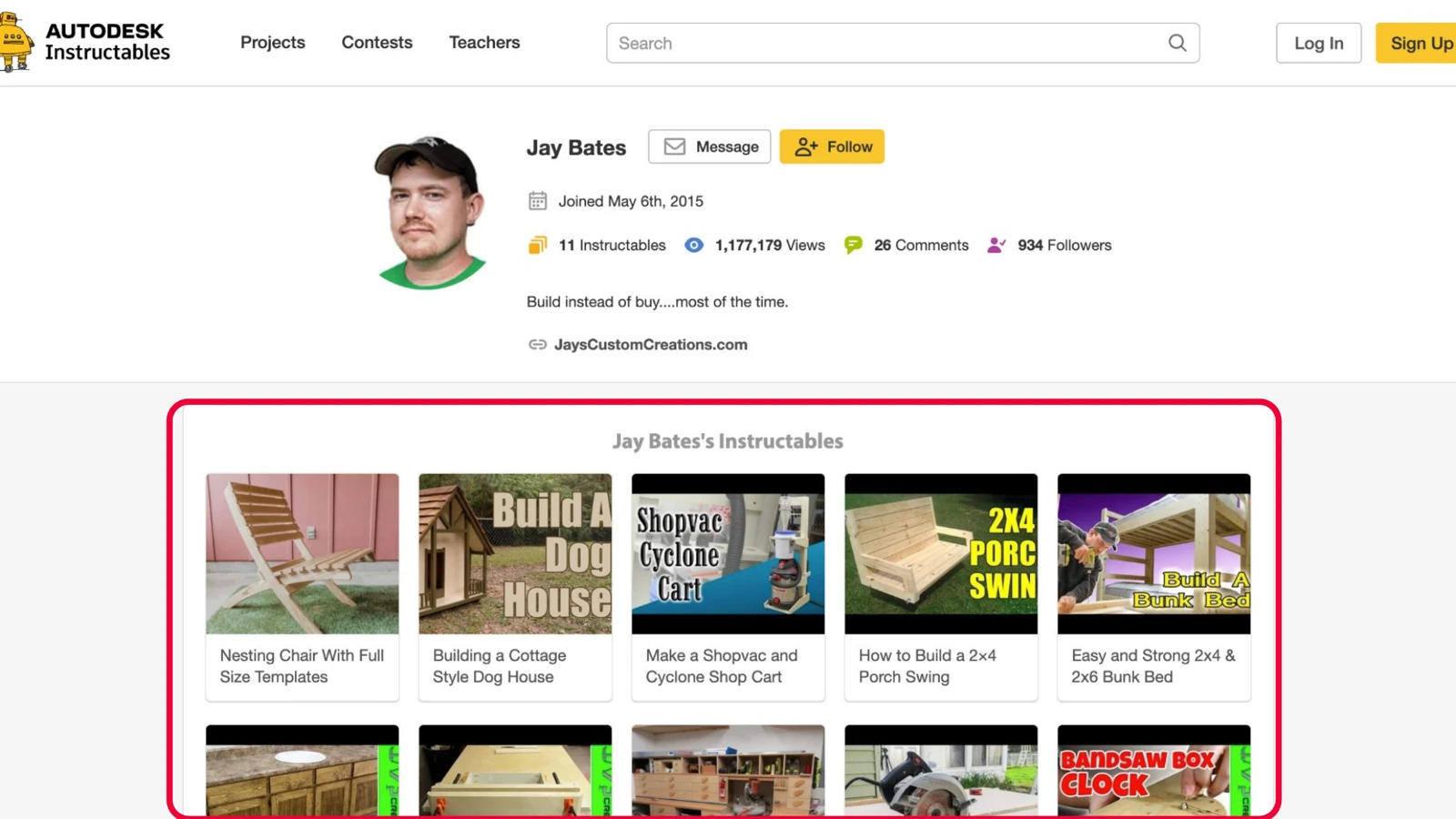
Eleven real builds. That’s a history, not a byline
Checklist: Experience
- First-person voice where the writer genuinely did the thing
- Unique insight or proprietary scoring the other nine results don’t have
- A demonstrated history in the subject, not a one-off article
- Original multimedia: photos, video, or both, rather than stock imagery
Building Trust With Bots
That’s how users assess trust. Now let’s flip to how bots, Google’s crawling, indexing and ranking systems, try to assess the exact same thing.
On-Page Signals
On-page signals are the easiest to influence, so they’re the best place to start.
Keywords
Keyword usage still matters, tied directly to Google’s helpful content questions: does the title accurately represent the content, and is coverage comprehensive? A backpack review that only ever says “backpack” and never touches “daypack” or “hiking pack” is missing coverage, not just keywords.
TF-IDF and N-Grams
TF-IDF, n-grams and NLP sit under this same banner. TF-IDF (term frequency-inverse document frequency) looks at word correlation across other pages ranking for the same query: long thought to help Google’s understanding of a page even if it isn’t a direct ranking input. More advanced systems like BERT and MUM use NLP to understand how words relate within a sentence, not just whether they’re present. A tool like Surfer is a reasonable way to get a handle on all three without doing the analysis by hand.
Search Intent
Search intent, which BERT helps Google understand, is the next layer. “Best backpacks” and “buy backpacks” clearly want different things: one review, one transactional, but it’s not always this obvious, and reviewing the SERP features Google already shows (comparison tables, star ratings, bylines) tells you what “comprehensive” looks like for that query.
Passage Indexing
Passage indexing changes the comprehensiveness calculus. You don’t need a dedicated article for every sub-question your topic raises. Search “is the North Face Borealis backpack waterproof” and you’ll get a full backpack review: Google has identified the one paragraph inside that answers the specific question, without it needing its own page.
Freshness
Freshness systems, sometimes called query deserves freshness, shift results based on what’s current. Search the biggest attendance at a Taylor Swift concert in January 2024 and you’d get one answer; search it in February and the answer moves. One warning: changing a date without changing the substance underneath is a red flag, not a freshness signal, and Google’s systems are built to catch exactly that.
Neural Matching
Neural matching connects content to a query without shared keywords at all. Search “why does my TV look strange” and you’ll get an article about the soap opera effect: no shared words, but it clearly answers the question. Users don’t search in keywords, and Google’s known that for a while.
Knowledge-Based Trust
Knowledge-Based Trust is a model from a Google research paper published in 2015, diagrammed here by BrightEdge. Five steps: crawl a site, compare it against a corpus of trusted sources, generate a trust score against accepted consensus, then reward sites that conform and penalise those that don’t.
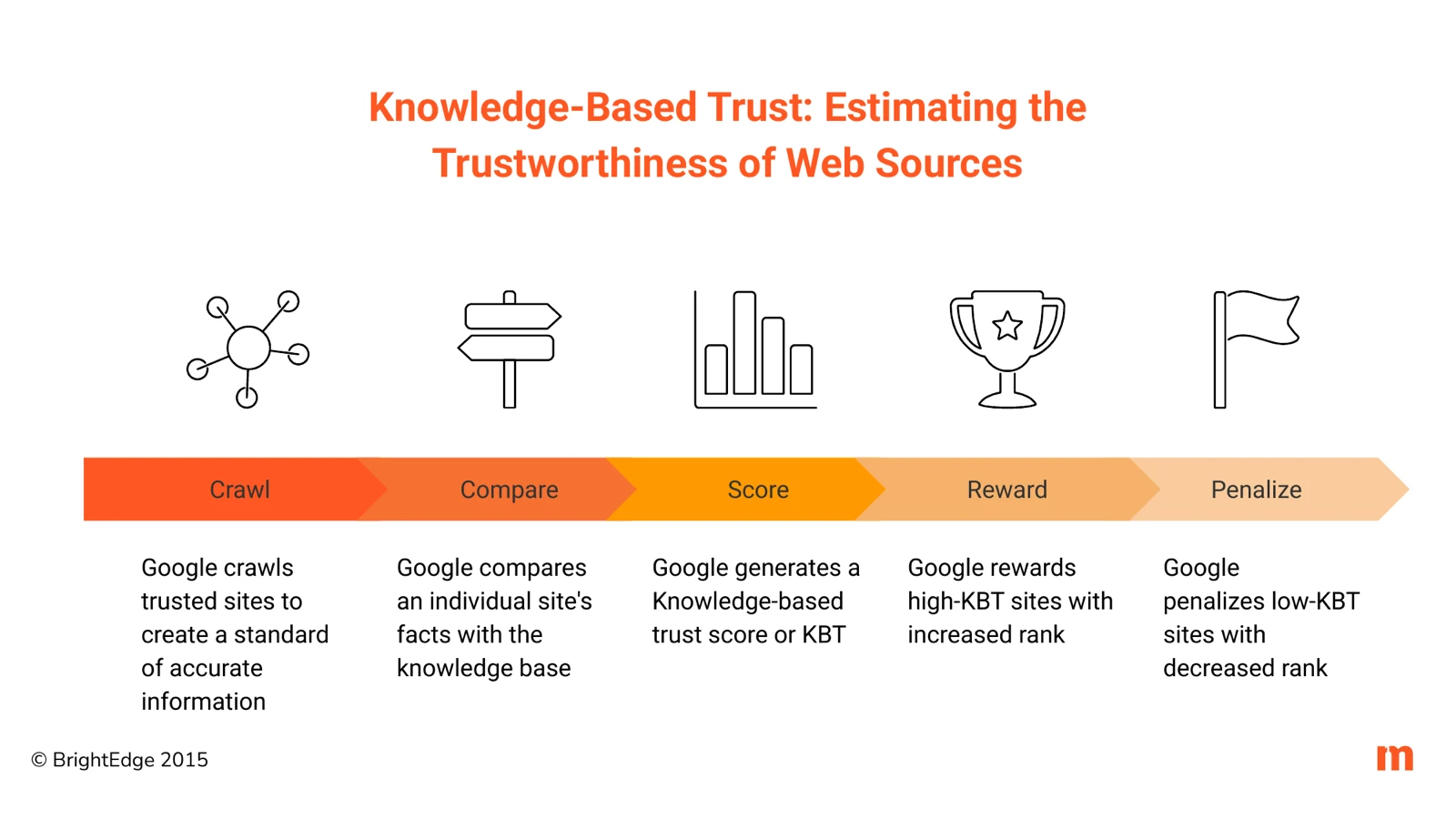
Step five is the one nobody wants to think about
Checklist: On-Page Signals
- Keyword usage that maps to genuine topic coverage, not just repetition
- Content built with an eye on TF-IDF, n-grams and NLP relevance
- Clear alignment to search intent, informed by what’s already ranking
- Content structured so passages can answer sub-questions on their own
- A live process for keeping genuinely time-sensitive content fresh
- Coverage broad enough that neural matching can connect it to adjacent queries
Off-Page Signals
PageRank
PageRank is still very real. Google’s own 2019 whitepaper on disinformation confirms it remains one of the signals used to understand authoritativeness, based on the links between pages (How Google Fights Disinformation).
Link Distance
There’s a patent, often called the link-distance patent, describing a system that measures how far, in link steps, a site sits from a trusted seed site like Wikipedia. It was reportedly introduced to counter PageRank manipulation by anchoring authority to sources Google already trusts, looping straight back to why building brand references matters for users too.
Anchor Text
Anchor text still plays into how Google reads the entities in a piece of text, and whether that text makes sense both on the page it sits on and the page it points to.
Brand Mentions
There’s genuine debate over whether brand mentions carry weight without a link. A patent around “implied links” covers mentions that infer a link without containing one. Whether Google uses that specific patent is almost beside the point: large language models are trained on a huge corpus of popular websites, so a brand mention, linked or not, is still feeding that training data somewhere.
Sentiment
Sentiment analysis is part of this picture too. G2 groups reviews into concepts using natural language processing, not unlike how Google’s own Cloud NL tools score sentiment on a piece of text: positive, negative, or mixed on specific attributes.
Branded Search
Popularity, measured through branded search volume, is another off-page signal worth tracking. Matt Diggity, having looked at hundreds of sites either side of the September 2023 Helpful Content Update, flagged branded search volume as one of the factors that seemed to separate the survivors from the casualties. That’s a practitioner’s read on one update, not a permanent ranking signal, but it’s worth tracking.
Vector Classification
Vector classification rounds out the picture: the theory that Google builds vector representations of websites and individual authors, associating them with topics so its systems can assess signals like E-E-A-T at scale. Olaf Kopp has published diagrams illustrating this, and there are patents around generating website representation vectors and author vectors.
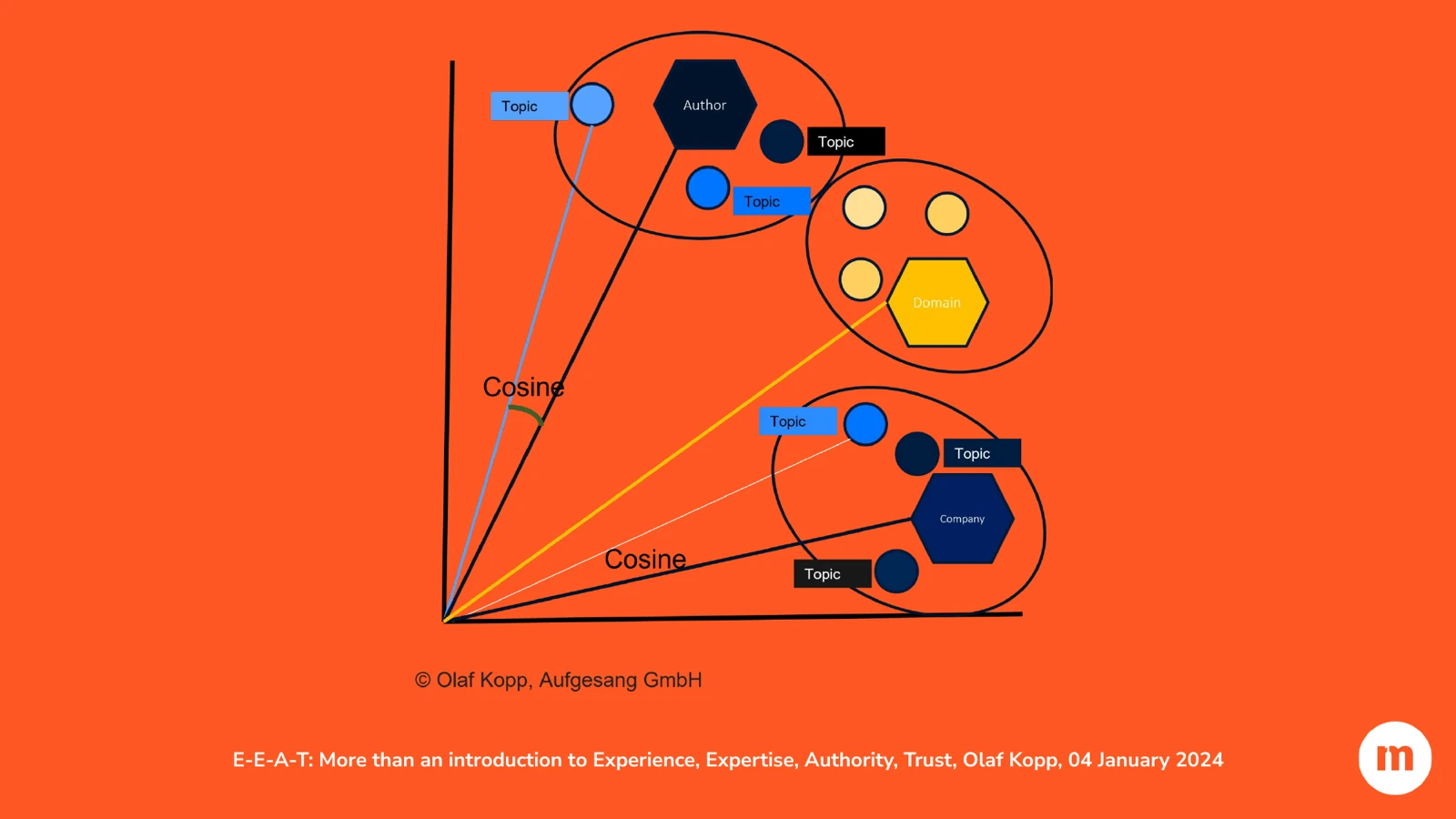
Roughly, the maths behind whether Google thinks an author actually knows the topic
Checklist: Off-Page Signals
- A genuine link profile, not just volume, feeding into PageRank
- Proximity, in link terms, to trusted seed sources in your niche
- Anchor text that makes contextual sense on both ends of the link
- Unlinked brand mentions treated as a real signal, not ignored
- An eye on sentiment, not just volume, in reviews and mentions
- Branded search volume tracked as a genuine popularity signal
The Knowledge Graph
Entities (people, places, organisations, and topics) sit at the centre of the Knowledge Graph, connected through relationships Google has established confidence in.
Most people have seen the Knowledge Panel, the box that appears alongside a search for a well-known entity. The panel is just a visualisation of the graph, not the graph itself. Not having a panel doesn’t mean you’re not in the graph: it just means Google hasn’t reached enough confidence yet to visualise it.
Your own website is generally the most trusted source about your own brand entity: what Jason Barnard of Kalicube calls your “Entity Home.” But Google leans on other trusted sources to corroborate what your site claims, and Wikipedia is the biggest one. Kalicube’s data puts roughly 65% of Knowledge Panel descriptions as coming from Wikipedia, with about 20% of panels carrying no description at all: it’s vendor data without a published methodology, so treat it as directional rather than precise. More interesting is Barnard’s own January 2024 research, which argues Wikipedia’s share has been falling sharply since mid-2023. That’s the same brand-reference advice from earlier, showing up again as a literal input into how confidently Google resolves who you are.
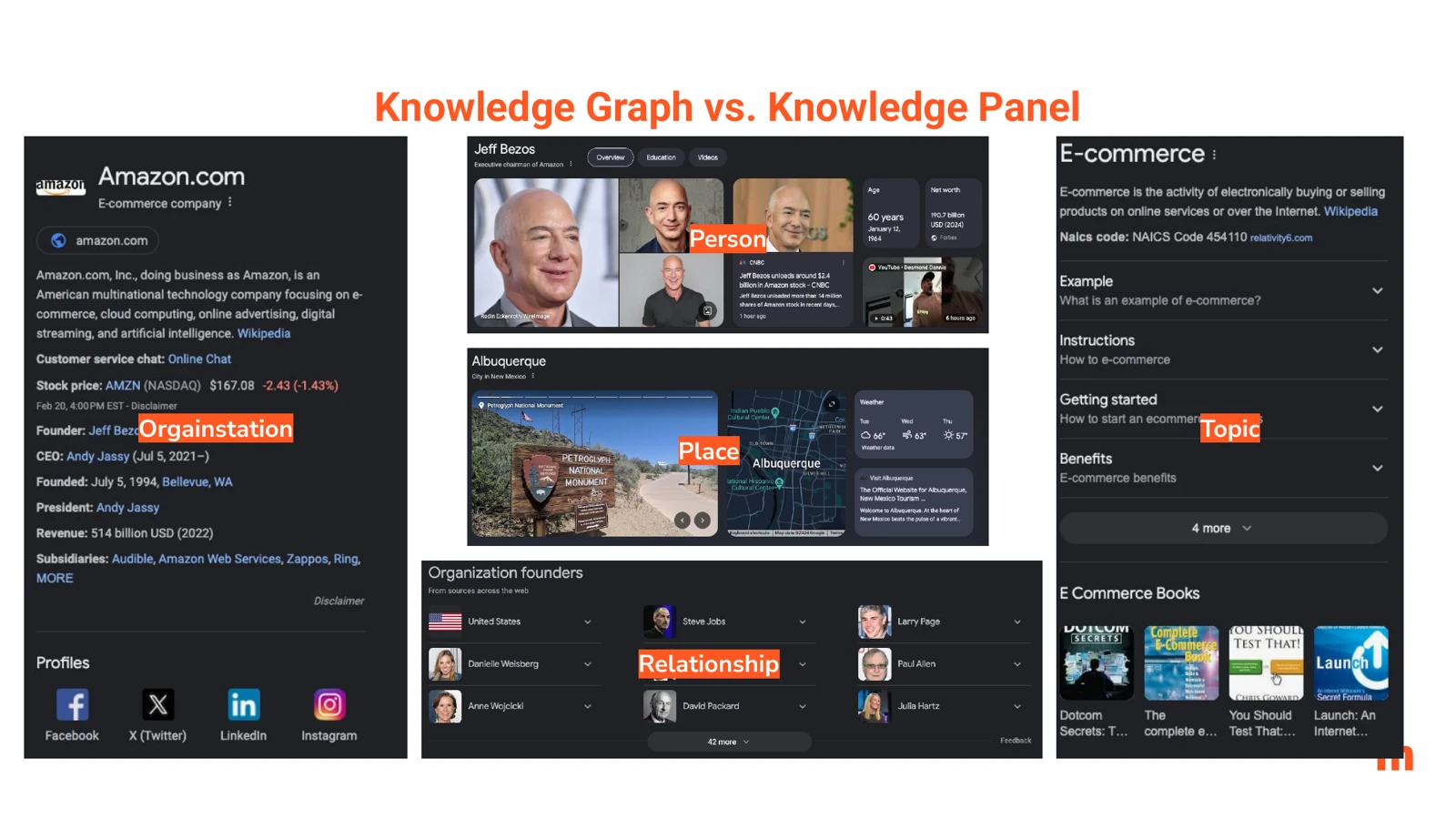
The graph is the database. The panel is just the window Google lets you look through
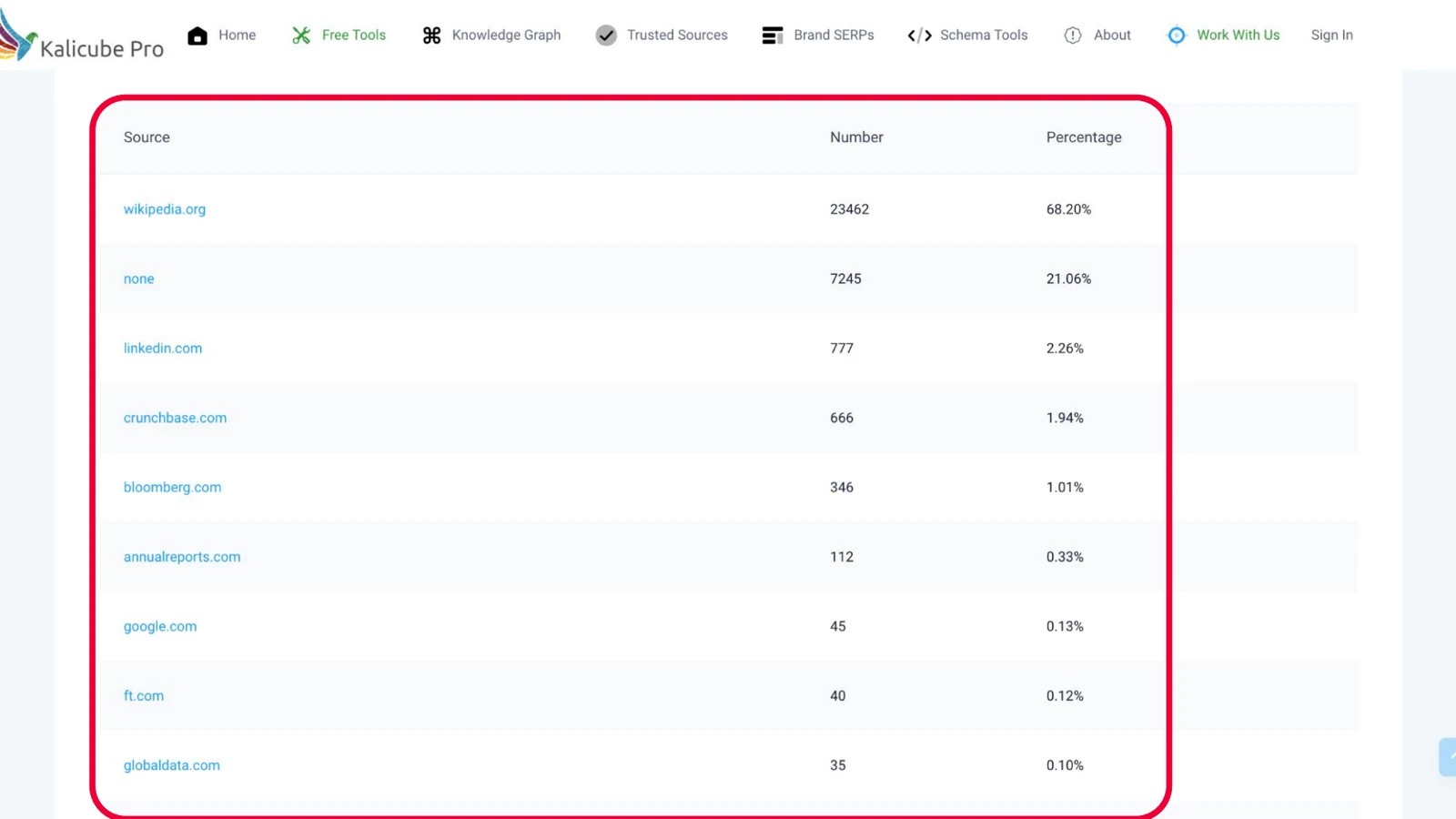
Wikipedia sits well above everything else on that list
Schema.org: Feeding the Graph Directly
If an About page builds trust with a human reading it, schema markup is how you tell a bot the exact same thing, explicitly.
WebSite and WebPage schema, including the more specific AboutPage, ContactPage and FAQPage types, are the structured-data version of the “what do you say about your site” signals covered earlier. Here’s an About page marked up as both at once, from Airtasker:
{
  "@context": "https://schema.org/",
  "@type": ["WebPage", "AboutPage"],
  "name": "About Airtasker",
  "description": "Access thousands of skilled people ...",
  "dateModified": "2023-04-17T13:37:12+00:00",
  "datePublished": "2022-07-19T16:10:17+00:00",
  "publisher": {
    "@type": "Organization",
    "name": "Airtasker"
  },
  "potentialAction": [
    {
      "@type": "ReadAction",
      "target": ["https://www.airtasker.com/au/about/"]
    }
  ]
}
Note the two dates. Article schema does the same job for content, tying a headline, an author and the publish and modified dates into something machine-readable, which echoes the recency signals that matter for human trust too. The properties worth caring about for E-E-A-T are the ones nobody bothers with:
{
  "@context": "https://schema.org",
  "@type": "NewsArticle",
  "author": [{
    "@type": "Person",
    "name": "Jane Doe",
    "url": "https://example.com/profile/janedoe123"
  }],
  "editor": {
    "@type": "Person",
    "name": "John Doe",
    "url": "https://example.com/profile/johndoe123"
  },
  "correction": {
    "@type": "CorrectionComment",
    "text": "An earlier version of this article misstated the number of ....",
    "datePublished": "2015-02-05T09:20:00+08:00"
  },
  "publishingPrinciples": "https://www.example.com/publishing-principles"
}
A named editor, a public correction, and a link to your publishing principles. That’s the transparency section from earlier, expressed in a way a crawler can parse.
Organization schema establishes the business entity itself. Person schema, particularly its knowsAbout, worksFor and alumniOf properties, is the structured equivalent of an author bio: credentials, affiliations, and topical focus, spelled out for a machine rather than implied through prose.
sameAs is the glue that ties it together. It links an entity, usually a person, to their other verified profiles (Wikipedia, LinkedIn, social accounts) so Google can merge them into a single, high-confidence node instead of treating each mention as a separate, weaker signal.
Put together, an author becomes a machine-readable claim about who they are and what they know:
{
  "@context": "https://schema.org",
  "@type": "Person",
  "name": "Angelo Huff",
  "description": "Defender of Truth",
  "jobTitle": "Professor",
  "knowsAbout": ["Investing", "Wealth management", "Behavioral finance", "Stock analysis"],
  "worksFor": {
    "@type": "Organization",
    "name": "Example Organization"
  },
  "alumniOf": {
    "@type": "EducationalOrganization",
    "name": "Example Educational Organization"
  },
  "sameAs": [
    "https://www.linkedin.com/in/your-profile",
    "https://x.com/your-handle"
  ]
}
knowsAbout is the one people skip, and it’s the most interesting: you are telling Google, in a structured field, which topics this person should be considered credible on.
A worked example makes this concrete: imagine a well-known entity like Jeff Bezos, his Person schema tagged with sameAs links to his Wikipedia page and other verified profiles. That combination lets Google merge every mention of him across the web into one confidently resolved entity, rather than a scatter of loosely related signals: the same mechanism available to anyone building author or founder authority, at a much smaller scale.
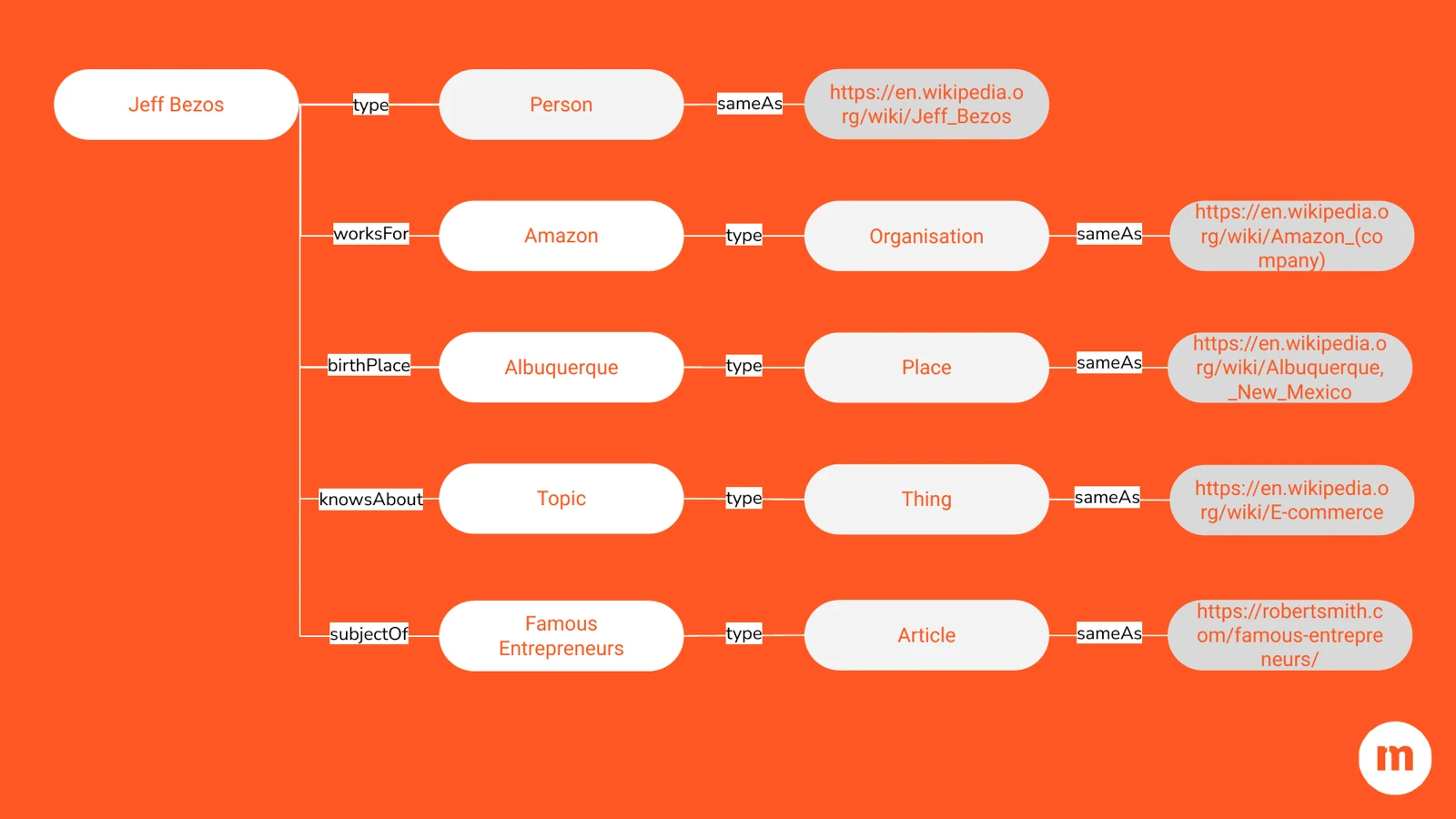
sameAs is the whole trick. It tells Google these scattered mentions are all one person
Checklist: Schema Types to Have in Place
- WebSite and WebPage, including AboutPage, ContactPage and FAQPage where relevant
- Article schema on every content page, with accurate dates
- Organization schema for the business entity
- Person schema for named authors, with
knowsAbout,worksForandalumniOffilled in sameAslinking every entity to its verified external profiles
It’s All About Confidence
So, how do you build trust with users and bots at the same time?
Turns out you’ve been doing it the whole way through this post: it’s the same work, looked at from two directions. An honest About page builds trust with a sceptical reader and, tagged as AboutPage schema, feeds the same signal to Google. A Wikipedia citation reassures a human through trust by association, and it’s one of the biggest inputs into how confidently Google resolves your Knowledge Graph entity. User-facing and bot-facing aren’t two campaigns. They’re one campaign, told twice.
It’s all about confidence. Just like a great restaurant, if you consistently serve up a great experience, people come back, and they bring their friends next time. Google’s small-menu framing from the start of this post ends up meaning the same thing by the end: consistency earns trust, and trust compounds, whether the diner is a person or a crawler.
If you only take one thing from this, start with the cheapest wins: an honest About page, current dates, real author bios, and Organization and Person schema in place. Everything else here builds on that foundation.